100,000+ Large Scale Poultry Cages Nigeria
100,000+ Large Scale Poultry Cages Nigeria
If you’re running or planning to start a large-scale poultry farm in Nigeria, one of the biggest decisions you’ll face is choosing the right equipment – especially when we’re talking about housing for over 100,000 birds. With the growing demand for eggs and poultry meat across Nigeria, more and more commercial farmers are scaling up their operations. And at that level, traditional floor rearing just doesn’t cut it anymore. That’s where high-capacity poultry cage systems come in – efficient, hygienic, and built for smart farming.
At Livi Machinery, we’ve helped dozens of Nigerian agribusinesses set up modern poultry farms with fully automated cage solutions designed to handle 100,000 birds or more. And from experience, we know what works on the ground here: tropical weather conditions, power fluctuations, labor availability, and long-term durability. In this guide, we’ll walk you through why large-scale poultry cages are worth the investment, what features to look for, and how to plan your system so your farm actually runs smoothly – even at 100K+ capacity.
What Makes Large-Scale Poultry Cage Systems Essential?
Running a backyard coop with a few hundred chickens is nothing like managing a 100,000-bird operation. The challenges multiply fast: feeding becomes a logistics nightmare, disease control gets harder, egg collection takes forever, and waste management turns into a public health consideration. That’s exactly why industrial producers globally have shifted toward tiered cage systems – they solve these problems efficiently.
For Nigerian farms, especially those located near Lagos, Kano, or Abuja with high market demand, investing in stacked poultry cages isn’t just an upgrade – it’s necessary for survival. These systems allow birds to be housed vertically, saving massive amounts of land space. Imagine trying to house 100,000 birds on the floor – you’d need over 15 hectares easily. But with three- or four-tier cages? You can fit the entire flock into just 3–5 hectares, including feed storage, manure handling, and worker access paths.
Beyond space savings, cage systems drastically improve biosecurity. Elevated birds stay dry and away from droppings, which cuts down ammonia buildup and the risk of infections like coccidiosis and respiratory diseases. Automated feeding and watering reduce human contact and contamination. Add in automatic egg collection belts, and suddenly you’re not only producing more but doing so with fewer workers and less daily stress.
Best Designs for 100K+ Capacity Farms in Nigeria
When designing a large-scale setup, there’s no one-size-fits-all model. But after installing systems across West Africa, certain configurations consistently deliver better results – especially under Nigerian weather and operational realities.
For breeders or pullet growers, we recommend step-type or A-frame chick rearing cages designed specifically for younger birds. These units usually have five tiers and include heating lamps, gentle flooring, and narrow bar spacing to keep chicks safe. They’re perfect for day-old to 16-week-old birds before transferring to laying or broiler houses. Thanks to modular design, you can line up hundreds of these units across multiple sheds, supporting tens of thousands at once.
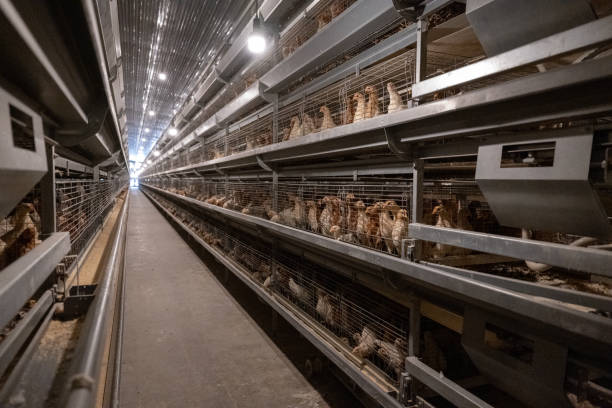
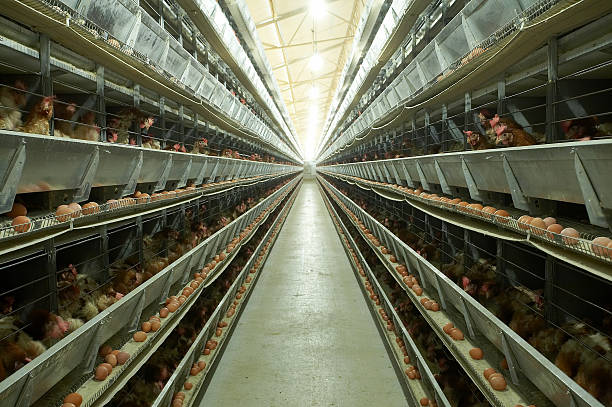
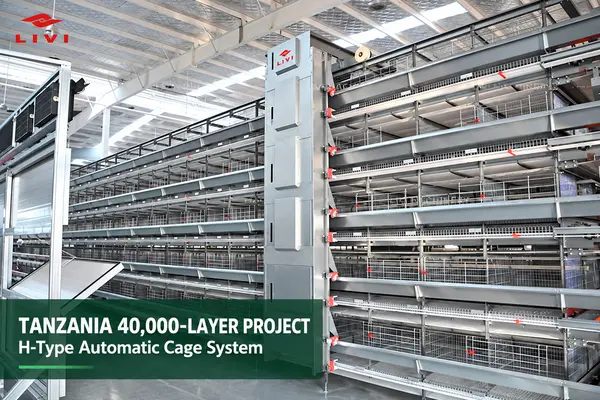
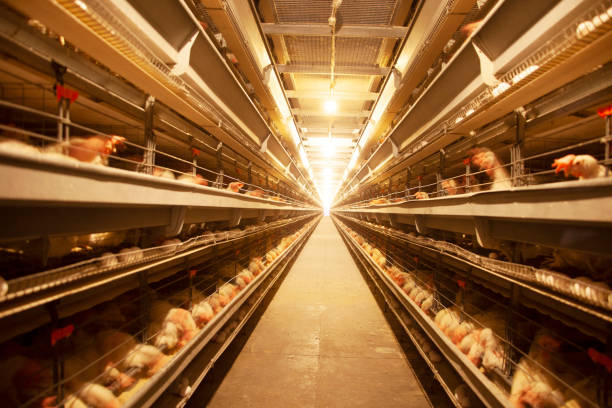
For layer hens (those producing eggs), colony-style battery cages have proven most effective. Each compartment holds 4–6 hens comfortably, with front roll-out mesh for automatic egg collection. We’ve installed full-house systems where every shed contains 12 rows of four-tier cages, stretching nearly 100 meters long – housing 8,000–10,000 birds per building. Multiply that by 10–12 sheds, and you hit 100,000+ with room to scale.
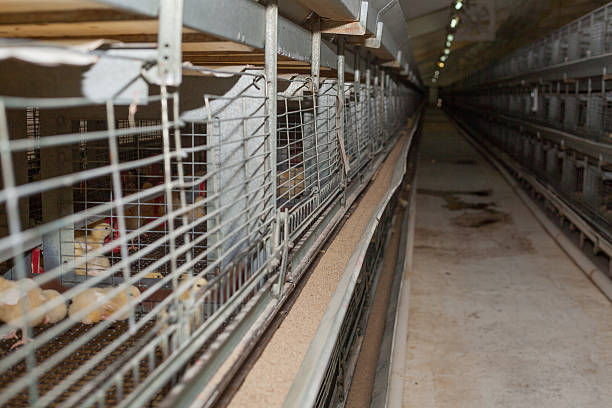
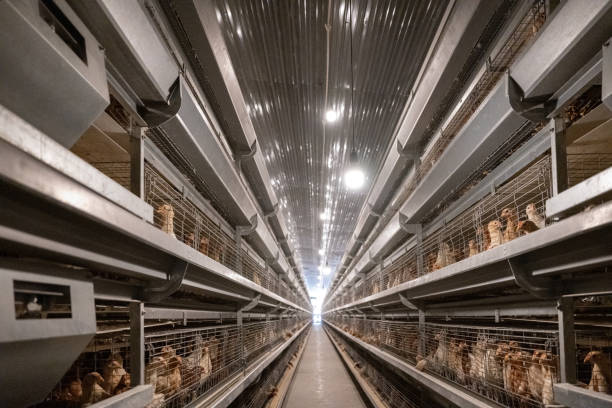
And for meat production? Our heavy-duty broiler cages are designed for fast-growing birds. While some still prefer floor-rearing for broilers, we see increasing interest in raised cage systems – especially in wet seasons when floor litter becomes damp and risky. With proper ventilation and wider spacing, broiler cages reduce footpad burns, breast blisters, and mortality rates significantly.
All our systems use galvanized steel wire that resists rust – critical in Nigeria’s humid climate. We pre-galvanize the wires before welding, then apply hot-dip galvanization afterward. This double protection ensures each cage lasts 15 years or more, even with daily washing and exposure to manure.
Smart Features That Boost Efficiency
You can’t manage 100,000 birds the same way as 10,000. It’s not just about more cages; it’s about smarter ones. That’s why modern poultry farms in Nigeria are integrating automation from day one.
Automatic feeding lines run along the top of each cage row, dispensing precise portions twice or thrice daily. No more missed meals or wastage. The system connects to silos holding up to 20 tons of feed, reducing loading frequency. For water, nipple drinkers with pressure regulators ensure constant supply without leaks or spillage – saving up to 90% compared to open trays.
Then there’s egg collection. Roll-up conveyor belts move freshly laid eggs gently to the front of each house. Workers don’t need to bend or search between bars. From there, eggs go onto a central transport belt leading straight to the grading room. One staff member can collect eggs from 20,000 birds in under an hour.
Ventilation and cooling matter too. In northern Nigeria’s heat or during dry season peaks, we install tunnel ventilation with evaporative pads. Paired with temperature sensors and automatic controls, these keep sheds below 30°C even when it’s 40°C outside. Happy hens lay better.
Finally, manure removal. Instead of scraping daily, farmers use either manual removable trays or fully automated scraper belts beneath each cage tier. The latter runs every 6–12 hours, dumping droppings into compost pits or drying tunnels. Not only does this cut labor by 70%, but it also creates valuable organic fertilizer – a bonus income stream.
Ready to Build Your High-Capacity Farm?
If you’re serious about running a profitable, large-scale poultry business in Nigeria, now is the time to think big – but also think smart. Choosing the right partner makes all the difference. At Livi Machinery, we don’t just sell cages. We help you plan the whole layout – from shed dimensions to power sources, bird density, workflow, and future expansion.
Our team offers site consultation, 3D design previews, installation support, and training for local technicians. Whether you’re starting from zero or upgrading an old farm, we’ll customize a solution that fits your budget, location, and goals. And since we manufacture everything in Zhengzhou with strict quality control, you get durable, cost-effective equipment shipped directly to ports like Lagos or Port Harcourt.
Over 200 Nigerian farms already trust us for their poultry housing needs. Why not join them? Click below or leave your contact details today, and our expert will call you within 24 hours to discuss your project – free of charge. Let’s turn your 100,000+ vision into reality.
Frequently Asked Questions
Can I install large poultry cages myself?
Yes, our systems are modular and come with detailed assembly instructions. But for farms over 50,000 birds, we highly recommend hiring a trained installer – or letting our technician fly in to supervise setup. It saves time and prevents costly mistakes.
How much do 100,000 chicken cages cost in Nigeria?
Pricing depends on configuration, automation level, and materials. On average, fully automated layer cage systems range from $600,000 to $900,000 for 100,000 birds. Broiler and breeder setups may vary. Contact us for a real quote based on your specs.
Are these cages suitable for Nigeria’s hot climate?
Absolutely. All our cages use double-galvanized wire resistant to rust and corrosion. When paired with proper ventilation and shade, they perform excellently even in high heat and humidity zones.
Do you ship to Nigeria? How long does delivery take?
Yes, we regularly ship container loads to Nigeria via sea freight. Production takes 20–25 days, and shipping from China to Lagos averages 30–35 days. We handle all documentation and customs support.
Can I expand my farm later?
Definitely. Our systems are designed for scalability. You can start with 30,000 birds and add more houses later using compatible modules. Power and feed lines can also be extended easily.
Do you provide after-sales service?
Yes. We offer remote troubleshooting, spare parts supply, maintenance guides, and optional on-site repair visits. Many of our Nigerian clients have trained staff who handle day-to-day upkeep confidently.
What types of chickens work best in cages?
Layer hens are ideal for cages. Broilers and breeders also thrive, though they require more space per bird. Chicks grow well in starter cages until transfer age.
How often should I clean the cages?
Daily water line checks, weekly feeder cleaning, and deep cleaning between batches are recommended. Automated systems make this much faster than floor housing.
Is there government approval for cage farming in Nigeria?
Cage farming is legal and widely accepted in Nigeria. Many state agricultural agencies even promote controlled environment systems for higher productivity and food safety.
Can cages reduce my labor costs?
Yes – automation cuts staffing needs by 50–70%. One worker can manage feeding, egg collection, and monitoring for 10,000+ birds with the right setup.