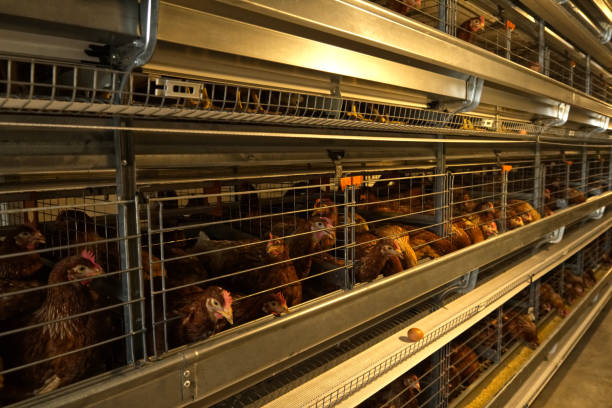
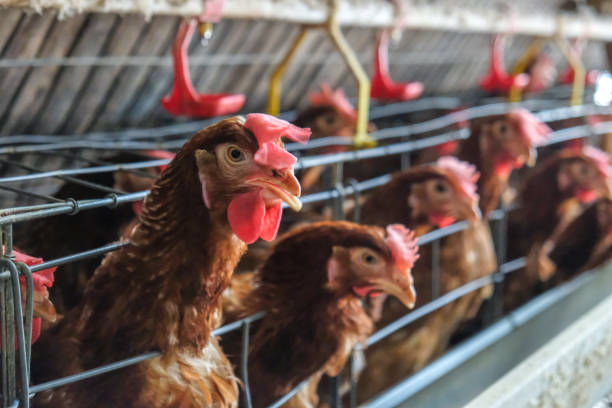
Chicken Cage System Price for Large Farms
 time:
2026-01-30
time:
2026-01-30 Chicken Cage System Price for Large Farms
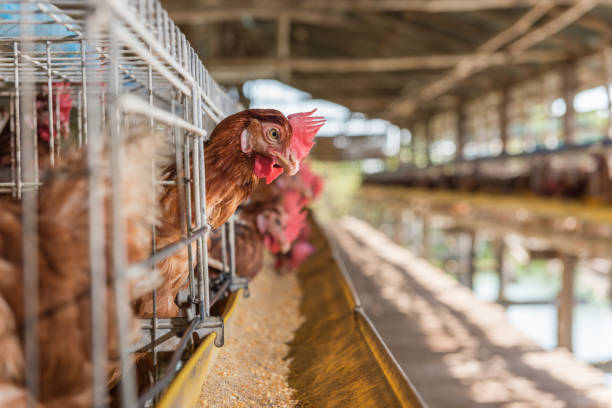
When you’re running a large-scale poultry operation—whether it’s 20,000, 50,000, or even 100,000+ birds—the question “How much does a chicken cage system cost?” isn’t just about budgeting. It’s about ROI, long-term durability, labor savings, feed efficiency, and how smoothly your entire production cycle runs. At郑州Livi机械制造有限公司, we’ve helped over 380 farms across 42 countries upgrade from manual or semi-automated setups to smart, scalable cage systems—and one thing we hear daily: “We know quality matters, but what’s realistic for our size and goals?”
Let’s cut through the confusion. There’s no universal “per-cage” price tag printed on a brochure—and for good reason. A chicken cage system isn’t a box of hardware you order off a shelf. It’s a tailored ecosystem—including cage structure, feeding & watering lines, manure removal, climate control integration, and often remote monitoring. So instead of quoting a flat number that misleads more than informs, we break down what actually drives the investment, how to compare apples to apples, and where smart spending today prevents costly headaches tomorrow.
What Makes a Chicken Cage System Price Vary So Much?
First—let’s address the elephant in the room: why do quotes range wildly from $8 to $25 per bird? The short answer is “value stacking.” Think of it like buying a car: a base model hatchback and a fully loaded SUV both transport people, but they serve different needs, lifespans, and operating costs.
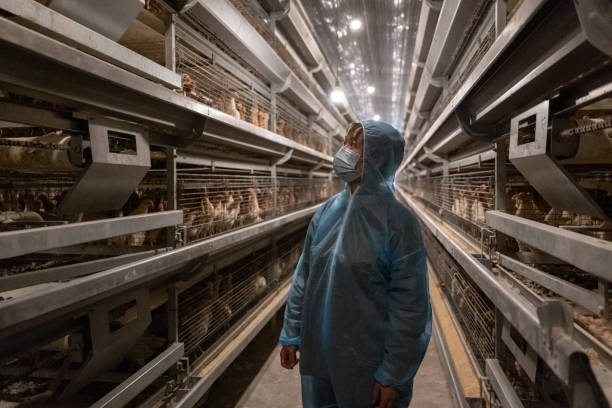
For large farms, the biggest price influencers are material grade, automation level, and system modularity. Take galvanized steel, for example. We use hot-dip galvanized Q235B steel—not just dipped or sprayed—because it lasts 15+ years in high-humidity, ammonia-rich barns. Cheaper cages using electro-galvanized or thin-gauge steel may save $1–$2 per bird upfront… but rust spots appear by year 3, welds weaken, and cage replacement mid-cycle is a logistical nightmare (not to mention downtime and stress on your flock). Then there’s automation. A manual feeding system is cheaper—but adds 2–3 extra labor hours per shift across 5–8 barns. Our integrated chain-and-trough system cuts that to under 30 minutes, while improving feed uniformity by up to 22% (based on our 2023 client data from farms in Vietnam and Nigeria).
Also, don’t overlook layout intelligence. Some suppliers charge per square meter—but ignore ceiling height, column spacing, or future expansion plans. At Livi, our engineers visit your site—or review architectural drawings remotely—to design cage rows that maximize airflow, minimize dead zones, and leave clean access lanes for service carts and manure scrapers. That “design phase” often adds 5–7% to the quoted system cost… but it saves 12–18% in installation time and avoids retrofitting down the road.
Real-World Pricing for Large Farms: Transparent & Practical
Here’s how pricing typically shapes up for serious operations—not theoretical models, but actual projects we’ve delivered since 2020:
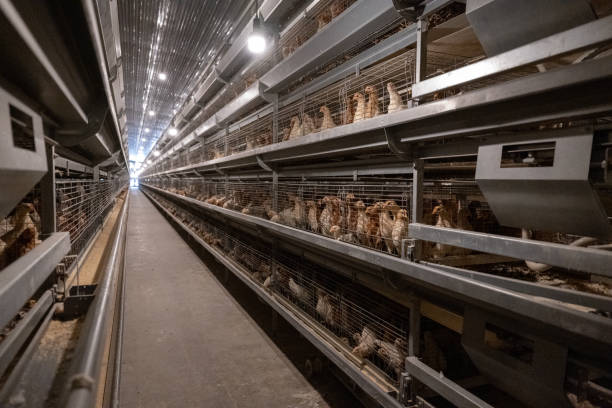
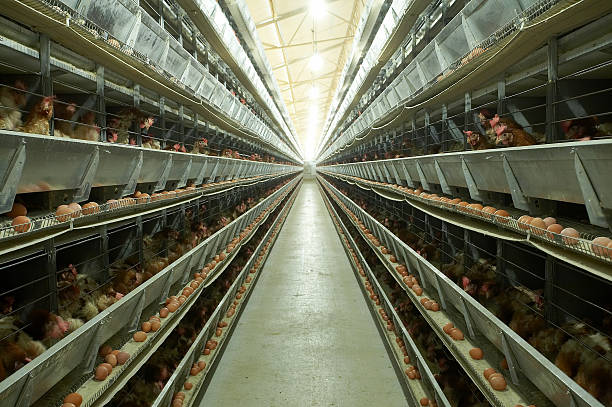
For a 30,000-bird layer farm using our standard 3-tier A-frame system with automatic feeders, nipple drinkers, and conveyor manure removal—we see total landed costs between $185,000–$220,000 USD. That includes design, shipping (FOB Zhengzhou or CIF port of your choice), customs clearance support, on-site supervision during installation, and basic operator training. Per-bird? Roughly $6.20–$7.30. Yes—it’s lower than many assume.
Now scale that to 80,000 birds in a multi-barn layout. With shared feed silos, centralized water filtration, and optional IoT sensors (temperature, NH₃, egg count counters), the average drops further—to $5.40–$6.10 per bird—because fixed-cost items like control panels and power distribution get amortized across more units.
And if your focus is meat birds (broilers) in high-density finishing cycles, our hybrid floor-cage system—combining raised wire floors over litter for better air circulation + automated feed/water—averages $4.80–$5.60 per bird for 50,000-capacity houses. Why lower? Less structural complexity, shorter cycle time, and faster ROI through improved FCR (feed conversion ratio)—our clients consistently report 0.08–0.12 points improvement year-on-year.
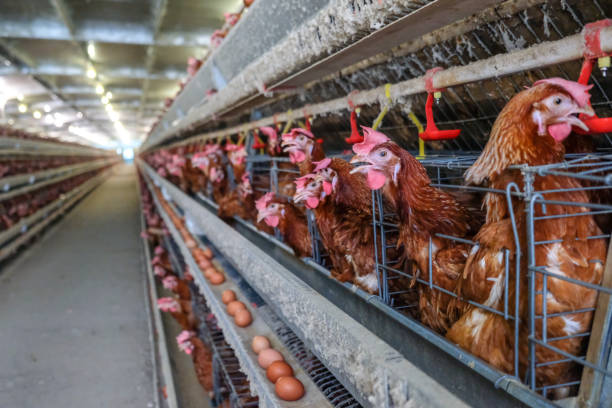
Bottom line? Volume matters—but so does fit. We never push “bigger is cheaper” blindly. If your farm has uneven terrain, limited electricity, or tight financing, we offer phased rollout options: install Cages + Water first, add feed automation in Phase 2, integrate sensors later. Your cash flow stays healthy. Your birds stay productive.
Why “Cheapest” Isn’t Always the Smartest for Large-Scale Operations
It’s tempting to go for the lowest bid—especially when capital is stretched. But large farms don’t fail from high initial cost. They struggle from hidden lifetime cost: frequent maintenance, bird mortality spikes due to poor ventilation or inconsistent water pressure, labor turnover because work is physically grueling, or even compliance risk when manure handling falls short of local environmental standards.
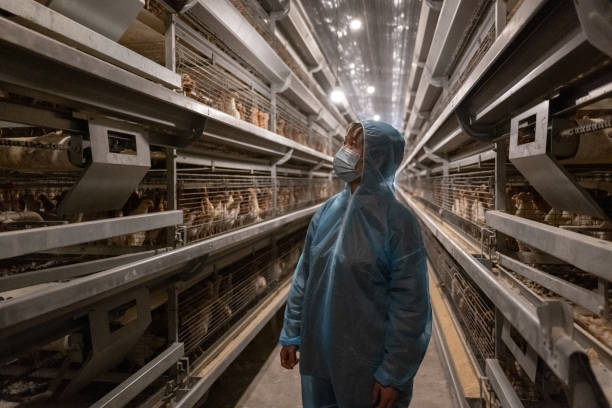
We recently worked with a farm in Ecuador that chose a lower-priced system from another supplier. Within 14 months, they replaced 37% of their cages due to corrosion around drinker nipples, upgraded two barns’ electrical systems to handle voltage drops from overloaded motors, and added three full-time staff just to manage daily feeder adjustments. Their effective “cost per bird” jumped to $9.40—with zero productivity gain.
At Livi, our warranty covers structural integrity for 15 years, drive motors for 5 years, and all galvanized surfaces against perforation for 10 years. More importantly—we stand by our performance commitments: feed delivery accuracy ≥98.7%, water pressure variance