Setting Up a Chicken Farm in Ghana: Equipment Needs for 20,000 Birds
 time:
2025-06-19
time:
2025-06-19 Setting Up a Chicken Farm in Ghana: Equipment Needs for 20,000 Birds
Ghana’s poultry industry is ripe with opportunity. With a growing population and an increasing demand for poultry products, establishing a chicken farm in Ghana, specifically an egg-laying or broiler operation, can be a profitable venture. However, success hinges on meticulous planning and investment in the right equipment. Scaling up to manage 20,000 birds demands careful consideration of housing, feeding, watering, waste management, and biosecurity. This article serves as a comprehensive guide to the essential equipment needed to set up a thriving chicken farm for 20,000 birds in Ghana, focusing on both layer and broiler farming.
**Housing Systems: The Foundation of Your Farm**
The housing system you choose will significantly impact your chicken performance, health, and overall profitability. Two primary options are available: deep litter systems and cage systems.
*Deep Litter System:* This traditional method involves housing chickens on a floor covered with absorbent material like wood shavings, rice husks, or straw.
_Pros:_
* Lower initial investment compared to cage systems.
* Allows for natural pecking and scratching behavior, potentially reducing stress.
* Manure mixed with litter can be directly used as fertilizer.
_Cons:_
* Higher risk of disease outbreaks due to direct contact with litter.
* Poorer feed conversion rates compared to cage systems.
* Difficulty in egg collection (for layers) and increased egg breakage.
* Higher labor requirements for cleaning and maintaining litter quality.
* Ventilation challenges, particularly in humid climates, leading to ammonia buildup.
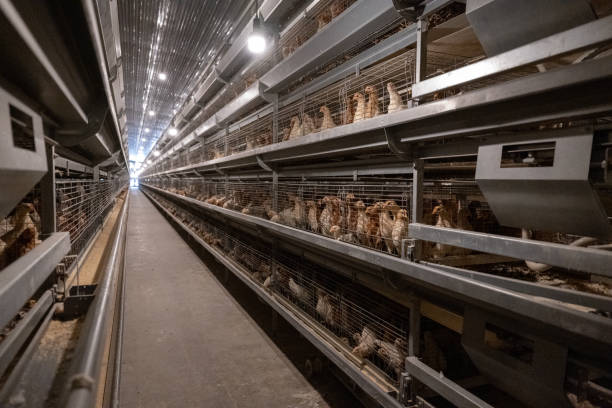
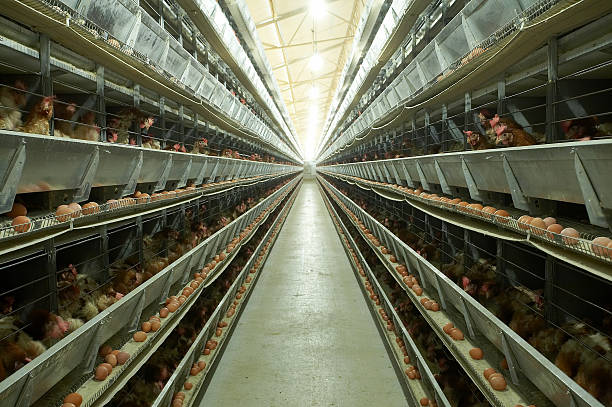
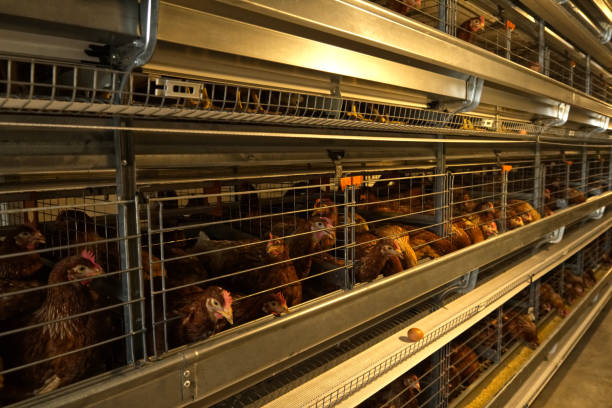
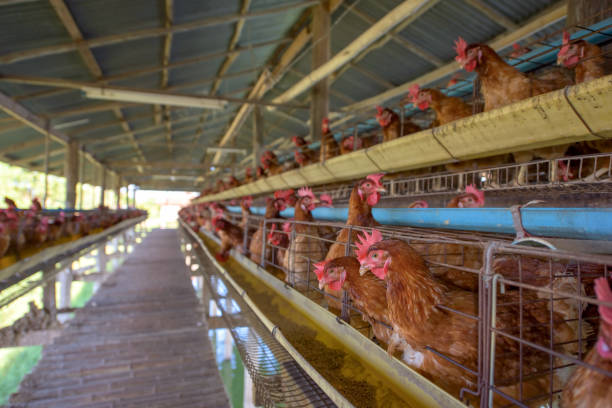
*Cage Systems:* These systems confine birds in individual or group cages, typically made of galvanized steel wire. We’ll differentiate below between layer and broiler cages.
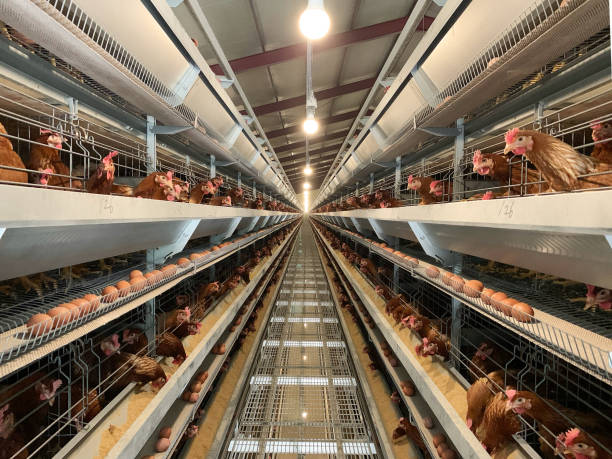
**Layer Cages:** These are specifically designed for egg-laying hens. Different configurations are available, including A-frame cages and H-frame cages.
_Pros:_
* Improved egg collection efficiency with automated systems.
* Reduced egg breakage and cleaner eggs.
* Better feed conversion rates as birds have less opportunity to waste feed.
* Easier monitoring of individual bird health.
* Reduced risk of disease transmission due to separation.
* Optimized space utilization, allowing for higher bird density.
* Better manure management with collection systems.
_Cons:_
* Higher initial investment compared to deep litter.
* Potential for stress and behavioral problems due to confinement (though modern enriched cages address these concerns).
* Requires reliable electricity supply for automated functions.
**Broiler Cages:** These cages are designed to accommodate the faster growth rate of broiler chickens raised for meat. They are usually larger and sturdier than layer cages.
_Pros:_
* Improved feed conversion rates for faster growth and weight gain.
* Reduced risk of leg problems due to better floor support.
* Easier to monitor bird health and identify sick birds quickly.
* More efficient use of floor space, allowing for a higher stocking density.
* Improved biosecurity with better control over the environment.
_Cons:_
* Can be more expensive than deep litter systems.
* Requires careful management of ventilation and temperature to prevent heat stress.
* Ethical concerns about animal welfare for some consumers.
*Equipment Checklist for Housing:*
* **Cages (Layer or Broiler):** Calculate the required number of cages based on the desired stocking density. Livi Machinery is a reputable supplier known for its durable and efficient cage systems. Consider the options to automate manure removal and egg collection (for layers).
* **Building Structure:** Ensure the building is adequately ventilated, insulated (if necessary), and protected from the elements. Consider local climate conditions when designing the structure.
* **Lighting System:** Install appropriate lighting to stimulate egg production (for layers) or promote growth (for broilers). Use energy-efficient LED lights with timers to regulate light cycles.
* **Ventilation System:** Essential for removing ammonia, moisture, and excess heat. Consider fans, ventilation ducts, and potentially cooling systems depending on the climate. A reliable ventilation system is paramount for controlling the spread of airborne diseases.
* **Heating System (if needed):** In cooler regions, provide heating to maintain optimal temperatures, especially for chicks.
**Feeding Systems: Delivering Nutrition Efficiently**
Efficient feeding is crucial for maximizing growth rates in broilers and egg production in layers, while minimizing feed wastage.
*Manual Feeding:* Labor-intensive but suitable for smaller operations. Chickens are fed manually using troughs or feeders.
*Automatic Feeding Systems:* These systems distribute feed automatically through troughs or chains.
_Types of Automatic Feeding Systems:_
* **Chain Feeding Systems:** A chain pulls feed along a trough, dispensing it to the birds. Suitable for both layers and broilers.
* **Auger Feeding Systems:** An auger (screw-like device) moves feed from a storage bin to the feeders.
* **Pan Feeding Systems (primarily for broilers):** Feed is dispensed into pans, providing easy access for birds.
*Equipment Checklist for Feeding:*
* **Feed Storage Silos:** Adequate capacity to store several weeks’ worth of feed. Calculate storage needs based on the number of birds and their daily feed consumption rates. Choose silos that protect feed from moisture and pests.
* **Feed Weighing Scales:** To accurately measure feed rations.
* **Automatic Feeders:** Select a system that suits your chosen housing system and bird type. Consider the ease of maintenance and accessibility for cleaning.
* **Manual Feeders (if needed):** For supplemental feeding or smaller batches.
**Watering Systems: Providing Clean and Accessible Water**
Access to clean water is essential for chicken health and productivity.
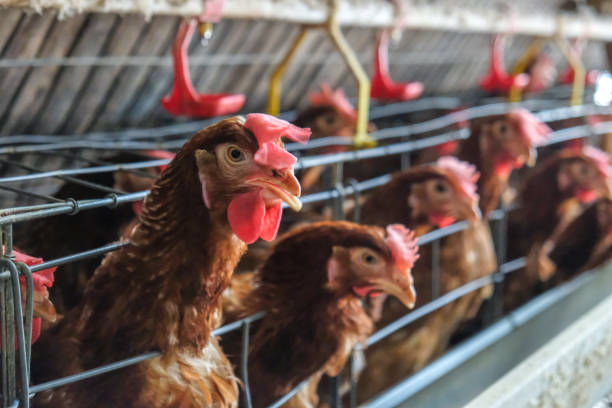
*Nipple Drinking Systems:* These systems provide water through nipples that birds peck to release water. Hygienic, efficient, and reduces water wastage. Highly recommended for both layer and broiler farms.
*Trough Watering Systems:* Water is supplied in troughs, which can be manual or automatic refill. While cheaper initially, they are prone to contamination and wastage.
*Bell Drinkers:* These provide a reservoir of water that birds can access. Less hygienic than nipple drinkers.
*Equipment Checklist for Watering:*
* **Water Storage Tank:** A clean water supply is critical. Ensure the tank is of sufficient capacity to meet the daily water needs of 20,000 birds.
* **Water Filters:** To remove impurities and ensure clean drinking water.
* **Water Pressure Regulator:** To maintain consistent water pressure for nipple drinkers.
* **Nipple Drinkers:** Opt for high-quality nipple drinkers designed for either layers or broilers. Ensure adequate spacing for all birds to access water easily.
* **Medication Dispenser (optional):** For administering medications and supplements through the water supply.
**Waste Management Systems: Maintaining a Clean Environment**
Proper waste management is vital for biosecurity, environmental protection, and minimizing odor.
*Manual Manure Removal:* Labor-intensive and not sustainable for large operations.
*Automatic Manure Removal Systems:* These systems automatically remove manure from the chicken house. More efficient and hygienic.
_Types of Automatic Manure Removal Systems:_
* **Scraper Systems:** Scrapers move along the floor, pushing manure into a collection pit.
* **Belt Conveyor Systems:** Manure falls onto a conveyor belt that transports it out of the building. Common in cage systems.
*Equipment Checklist for Waste Management:*
* **Manure Collection Pits:** To store manure before disposal or processing. Ensure pits are properly sealed to prevent leakage and odor.
* **Manure Spreader (optional):** For spreading manure as fertilizer.
* **Composting Equipment (optional):** To compost manure for use as fertilizer. Reduces odor and pathogens.
* **Waste Disposal Bags/Containers:** For collecting and disposing of dead birds and other waste materials.
**Biosecurity Equipment: Protecting Your Flock**
Biosecurity is crucial to prevent disease outbreaks.
*Equipment Checklist for Biosecurity:*
* **Foot Baths:** Disinfectant-filled baths at entry points to prevent the spread of pathogens.
* **Hand Sanitizers:** For personnel hygiene.
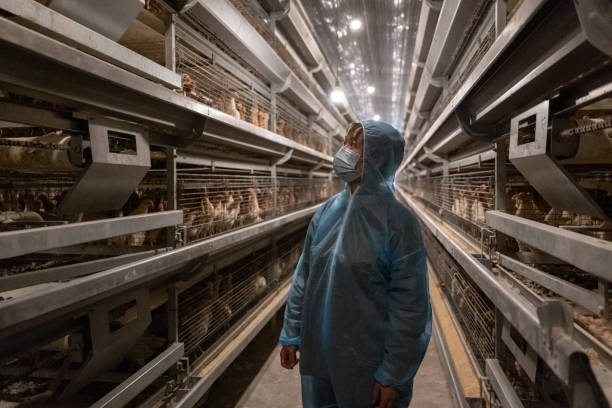
* **Protective Clothing:** Overalls, boots, and gloves for farm personnel and visitors.
* **Disinfectant Sprayers:** For disinfecting surfaces and equipment.
* **Rodent Control:** Traps and baits to control rodent populations.
* **Insect Control:** Insecticides and fly traps to control insect populations.
**Other Essential Equipment:**
* **Egg Collection Equipment (for layers):** Manual collection trays or automated egg collection belts.
* **Egg Grading and Sorting Equipment (for layers):** To grade eggs based on size and quality.
* **Incinerator (for dead bird disposal):** A safe and hygienic way to dispose of dead birds.
* **Generator:** As a backup power source in case of electricity outages. Vital for maintaining ventilation, temperature control, and automated systems.
* **Scales:** For weighing birds to monitor growth rates.
* **Record Keeping System:** Maintaining accurate records of feed consumption, egg production, mortality rates, and other key performance indicators is essential for effective farm management.
* **Alarm System:** To alert you to issues such as power failures, temperature fluctuations, or equipment malfunctions.
**Choosing the Right Supplier: Livi Machinery’s Expertise**
Selecting a reliable equipment supplier is crucial. Livi Machinery is a leading manufacturer of poultry equipment, specializing in egg-laying chicken cages and broiler chicken cages. Their products are known for their durability, efficiency, and compliance with international standards. When choosing equipment, consider factors such as:
* **Quality and Durability:** Invest in equipment that is built to last and withstand the rigors of daily use.
* **Efficiency:** Choose equipment that maximizes productivity and minimizes waste.
* **Ease of Use and Maintenance:** Select equipment that is easy to operate and maintain.
* **After-Sales Service:** Ensure the supplier provides excellent after-sales service and support.
* **Cost-Effectiveness:** Balance initial investment with long-term operating costs and potential returns.
**Conclusion: Investing in Success**
Setting up a chicken farm for 20,000 birds in Ghana requires a significant investment in the right equipment. By carefully considering the housing system, feeding system, watering system, waste management system, and biosecurity measures, you can create a farm that is productive, efficient, and sustainable. Partnering with a reputable supplier like Livi Machinery can help you select the best equipment for your specific needs and ensure the long-term success of your poultry farming venture. Remember that careful planning, meticulous management, and a commitment to best practices are essential for maximizing profitability and contributing to the growth of Ghana’s poultry industry. Don’t hesitate to consult with experienced poultry farmers and agricultural advisors to gain valuable insights and guidance throughout the process. Your due diligence will contribute significantly to the long-term viability and profitability of your poultry farm.