Expanding from 30,000 to 50,000 Layers: Which Equipment Can You Keep?
You do not automatically need to replace all your equipment when expanding from 30,000 to 50,000 layers. Review each system against the proposed layout, its condition, usable capacity and connection requirements. Some equipment may stay on its original job, some may need extra capacity, and the additional house may work better with its own equipment.
The starting point is your operating farm: which houses are occupied, what is installed, and how feed, water, eggs and manure move today. An expansion plan should show exactly what stays, what changes and how the work will be carried out around the existing flock.
Can I reach 50,000 layers without replacing everything?
Possibly, but “keep the equipment” can mean two different things. You might keep a feeder serving its original 30,000 birds while installing another system for the extra 20,000. Or you might extend a shared system after its capacity and interfaces have been checked. These are different purchases, even though both retain existing assets.
Ask for an equipment review with three clear outcomes:
- Keep: the existing equipment continues its defined job, with condition, capacity and access checked.
- Add capacity: retain suitable parts and specify the additional storage, lines, drives or other components needed for the revised job.
- Install separately: equip the new house with its own system, sharing only the infrastructure that has been confirmed suitable.
Where details are missing, mark the item “needs checking.” That is different from approving it for reuse. A model number, a photograph and a record of how the system operates are more useful than an assumption that equipment for 30,000 birds can simply be stretched to 50,000.
| System | Evidence to collect | Decision to make |
|---|---|---|
| Cages and house | Actual cage layout, condition, clear height, columns, aisles and equipment access. | Keep the existing layout, redesign a verified section, or put the extra birds in another house. |
| Feed storage and delivery | Silo details, delivery route, feeder model, line lengths and actual filling times. | Keep the original house feeder; check separately whether storage and upstream delivery can serve both houses. |
| Water | Source, tank and pump details, pipe routes, treatment arrangements and pressure or flow records. | Retain components with confirmed capacity; add storage, pumping or distribution where the expanded demand requires it. |
| Egg handling | Collection equipment, transfer heights, route, collection schedule and receiving or packing capacity. | Share a compatible transfer route only if it can handle the planned collection window; otherwise separate the routes. |
| Manure handling | House removal method, discharge points, transfer equipment and the outside receiving area. | Check the whole route; an existing outlet is not automatically suitable for another house. |
| Power and controls | Electrical drawings, motor nameplates, circuit and control-panel information, running schedule and backup arrangements. | Have qualified personnel confirm loads, starting requirements, protection, controls and any required additions. |
| Ventilation and environmental controls | Existing house design, airflow arrangement, equipment information and operating records. | Review each house for its own proposed stocking and layout; separately check any shared power or control capacity. |
Can I put the extra birds in the existing house?
Only a revised layout and technical review can answer that. Unused floor space does not, by itself, confirm space for another 20,000 layers. Measure the building inside, including clear height below beams, columns, doors, existing cage rows, aisles and the space used by drives, collection equipment and maintenance work.
Compare two options before ordering:
- Add within the existing building: check the proposed cage arrangement together with ventilation, feeding, drinking, egg and manure routes, access and the work needed inside an occupied house.
- Add another house: check the new building and its equipment separately, then identify which feed, water, electrical and material-handling connections might be shared.
The second option may let more work take place away from the existing flock, but the shared connections still need planning. The first option may use an existing building, but it can involve more work inside the production area. Compare the complete scope, including any flock movement and interruption, rather than choosing on building cost or cage capacity alone.
If another building is needed, use our 50,000-layer house planning guide for the site inputs. The expansion review must also show what happens to the equipment already in use.
Will new equipment work with my existing lines and controls?
Confirm the actual interfaces before treating two systems as one. Matching bird capacity, a familiar brand name or a similar-looking belt does not establish compatibility.
For each proposed connection, ask the designer and installers to identify:
- The equipment at both ends: manufacturer, model, version where available, and relevant drawings.
- The physical connection: position, height, direction, supports, access and any adapter or transfer section.
- The operating connection: which device starts or stops the next one, how stops and faults are handled, and whether the control system supports the addition.
- The responsibility: who supplies the connection parts, completes the work and verifies that the combined arrangement operates as intended.
For example, reusing a house egg collector is not the same as confirming that its discharge can join a shared conveyor. The transfer arrangement, operating sequence and receiving capacity all need checking. If the connection cannot be confirmed, compare a separate collection route rather than assuming the old collector must be replaced.
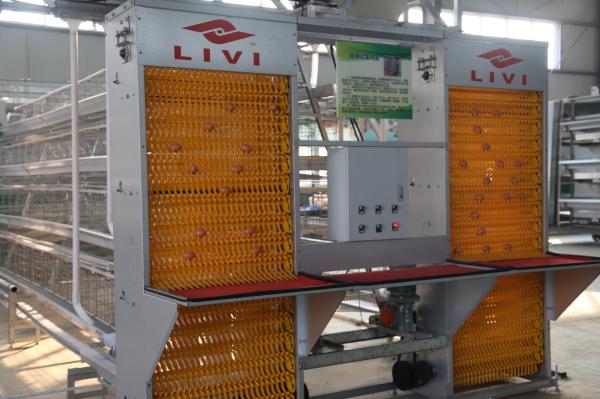
The same approach applies to feed delivery and controls. Keep spare-part identification specific to the confirmed models; similar components should not be treated as interchangeable without technical confirmation.
Can the existing services support another 20,000 layers?
Check the shared services for the expanded operating plan. The fact that the farm runs satisfactorily at 30,000 birds does not establish how much spare capacity is available.
Feed: separate storage capacity from delivery capacity
A silo may provide enough storage while the route from that silo cannot deliver to both houses within the required feeding schedule. Record actual feed use, refill arrangements, transfer routes and filling times. Ask whether the original house feeder can remain unchanged while the new house gets its own feeder, and whether upstream storage or delivery needs additional capacity.
Water: check performance at the birds, not only at the tank
Review the source, storage, pumping, treatment and distribution together. Have the installer check the proposed drinking lines against their specified pressure and flow requirements, including the farthest points while the relevant houses are operating. The new pipe route, elevation and simultaneous demand matter when deciding whether a pump or distribution line can be retained.
Eggs and manure: follow each route to its destination
For eggs, check the busiest planned collection period, transfer points and the receiving or packing area. Two house collectors may each work correctly while a shared receiving stage still needs more capacity.
For manure, follow the route from beneath the cages through each transfer to the outside receiving area. Confirm discharge positions, operating cycles, access and how the material will be removed or stored. Keep house removal equipment, outside transport and storage responsibilities clear in the quotation.
Electricity, backup power and ventilation: use the actual equipment list
Give a qualified electrical professional the existing and proposed motor, control and ventilation equipment information. Ask for a review of simultaneous running loads, starting requirements, protection, cables and the agreed backup loads. Increasing the flock from 30,000 to 50,000 does not, by itself, specify a generator size or a new electrical rating.
If supply interruptions occur at your particular site, include the changeover and restart arrangements in the review. Ventilation requirements must also be assessed for each house’s actual design and proposed stocking, rather than inferred from the capacity of a neighbouring building.
This whole-farm check is consistent with FAO guidance on poultry management and housing, which treats the physical environment, feed, clean water and waste management as connected parts of poultry production.
Do I have to stop production or move the flock?
It depends on where the work takes place and which operating systems must be interrupted. An independent new house may allow much of its construction and installation to happen separately. Work inside an occupied house, changes to its cage layout, or a switch to shared water, power or conveyors needs a specific operating plan.
Before agreeing the installation sequence, separate the work into three groups:
- Independent work: tasks in the new area that do not interrupt services to the existing birds.
- Connection work: tasks requiring an agreed isolation, changeover or interruption window, with arrangements to maintain essential services.
- Work inside an occupied house: tasks needing a decision on access, separation, flock movement or clearing a section, agreed with the farm manager and relevant site professionals.
Map construction deliveries, people, tools and manure traffic against the farm’s existing biosecurity arrangements. Agree whether work can proceed house by house. Put any expected interruption, flock movement and associated costs into the comparison between modifying the old building and adding a new one. A no-interruption promise or a fixed number of installation days cannot be established from flock size alone.
What should be checked before the systems run together?
Have the installation team agree the testing sequence before the final connections are made. Check new equipment individually, then the relevant combined operating sequence. Include feed delivery, drinking-line performance, egg and manure transfers, ventilation controls, alarms and the agreed power-changeover arrangements. Record the results and resolve any outstanding connection issues before adding the new flock.
The final test procedure should follow the equipment instructions and the approved site plan. Do not use the birds themselves as the first test of whether a new shared supply works.
What does LIVI need to review my expansion?
Send the current setup as well as the target. For a Nigerian project moving from 30,000 to 50,000 layers, include:
- The project location, current flock and house occupancy, additional 20,000-bird target, and preferred timing.
- A site sketch showing existing and proposed buildings, access, feed storage, water, power, egg handling and manure routes.
- Measured internal house dimensions, clear heights, columns, doors, cage rows and aisles. If you have no drawings, start with labelled measurements, photographs and a walk-through video.
- Equipment nameplate photos and overall pictures of feeders, silos, pumps, controls, egg collectors, manure equipment and ventilation equipment.
- Available operating records, such as feed delivery times, water-supply observations, collection schedules and the equipment that runs together.
- What you want to keep, which activities must continue, and whether a new house or work inside the existing house is being considered.
LIVI offers layout design and installation support. Use the review to establish the proposed equipment and connection scope; confirm the final design, responsibilities and site-service arrangements before ordering.
How much will the expansion cost?
The price depends on your existing equipment, site conditions and the configuration selected for the extra birds. Request a project quotation that separates retained assets, adaptation or capacity additions, new equipment, site works, delivery and installation services. State exclusions clearly. A flock target alone is not enough for a final price.
Send LIVI your current layout, equipment photos and 50,000-layer target. Start with what is already operating, so the proposed expansion can show what stays, what is added and which connections need checking.