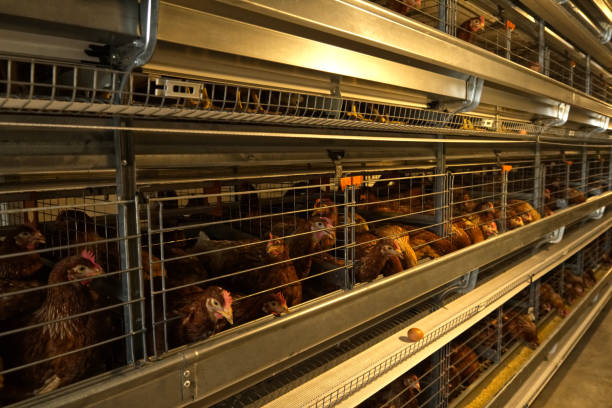
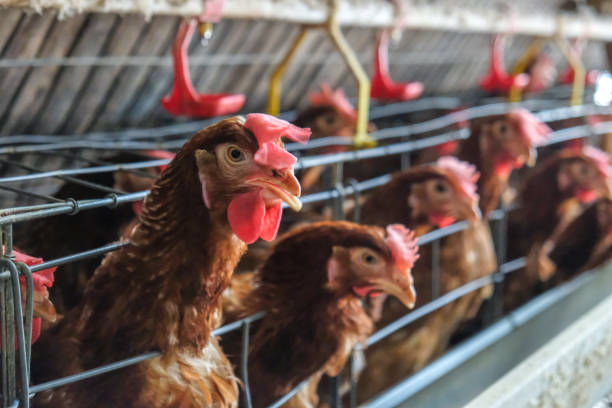
Automatic Layer Cage System for 20,000 Chickens – Ghana
Automatic Layer Cage System for 20,000 Chickens – Ghana
Running a large-scale commercial egg production farm in Ghana comes with its own set of challenges — from labor costs and inconsistent egg yields to hygiene issues and disease outbreaks. That’s why more farmers across Accra, Kumasi, and rural regions are turning to automatic layer cage systems designed for 20,000 chickens. These modern poultry solutions not only simplify daily management but also boost productivity, improve bird health, and significantly increase profitability over time. If you’re planning to scale your farm or start a new one, investing in an automated layer house could be the game-changer you’ve been looking for.
At Livi Machinery, we’ve helped dozens of Ghanaian poultry farmers transition from traditional deep litter or semi-scatter systems to fully automated setups tailored to local conditions. Our experience has shown that proper design, smart automation, and high-quality materials make all the difference when building a successful operation in West Africa’s tropical climate.
Why Automation Is Changing Egg Farming in Ghana
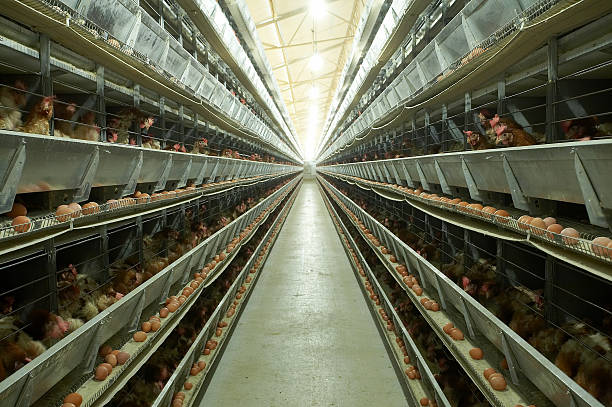
Let’s face it — managing 20,000 laying hens by hand isn’t practical anymore. Feeding, watering, egg collection, manure removal, and even ventilation need consistent attention every single day. Doing this manually means high labor costs, human error, and inefficiency. That’s where automation steps in. An automatic layer cage system takes care of most routine tasks with minimal human intervention. For example, our conveyor belt feeding system ensures each chicken gets the right amount of feed at scheduled times. The nipple drinking lines provide clean water on demand while preventing spillage and bacterial growth. And perhaps the most impressive feature? Automatic egg collection belts that gently carry laid eggs to a central collection table, reducing breakage and making grading faster than ever.
But beyond convenience, automation improves animal welfare. Modern cages maintain optimal stocking density, offer perches, and support easy access to food and water. This leads to less stress, better immunity, and higher egg production rates — often reaching 90%+ peak lay performance. In Ghana, where temperatures can soar during the dry season, integrated cooling and ventilation systems keep birds comfortable year-round, avoiding heat stress-related drops in output.
Farmers who’ve upgraded to automation report saving up to 60% on labor costs and seeing a return on investment within 18–24 months. Plus, consistent egg quality helps build brand trust with supermarkets, wholesalers, and export partners.
Key Features of a 20,000-Chicken Automated Layer House
When designing a full-scale egg production facility for 20,000 birds, several critical components must work together seamlessly. Here’s what a complete turnkey system typically includes:
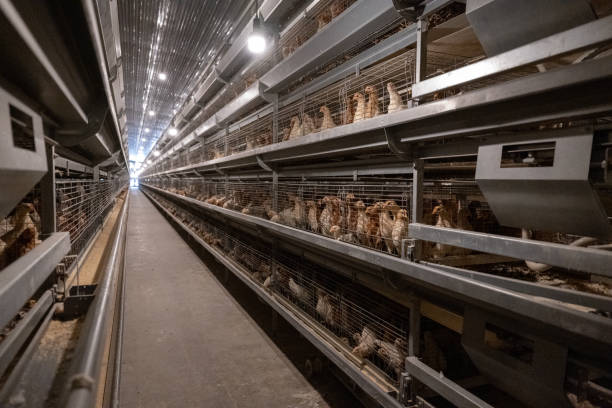
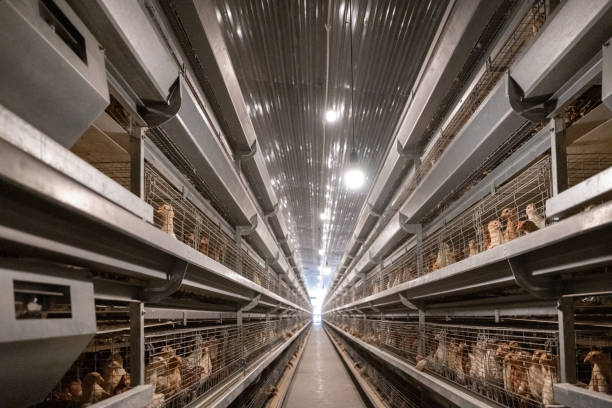
First, there’s the cage structure itself. We use galvanized wire mesh with anti-rust coating to withstand Ghana’s humidity and occasional heavy rains. Cages are usually arranged in 3- or 4-tier configurations to maximize space without overcrowding. Each tier is accessible via walkways or platforms, making inspection and maintenance easier.
Next, feeding and watering lines run the length of the house. These are connected to control boxes and driven by motorized systems that activate at preset intervals. Feed bins located outside the house connect to augers that push pellets into the main line, ensuring freshness and reducing rodent risks. Nipple drinkers prevent wastage and help maintain dry floors — a crucial factor in controlling coccidiosis and respiratory diseases common in warm climates.
Then come the egg collection belts. Every row of cages has a dedicated belt that moves eggs gently toward one end of the shed. From there, eggs can be transferred to a sorting table or packing station. This reduces labor, minimizes cracked eggs, and keeps eggs cleaner since they never touch manure directly.
Manure management is another key aspect. Without proper handling, droppings can cause ammonia buildup, harming bird health and lowering egg production. That’s why we install either scraper or belt-based manure removal systems that operate automatically — some models even have drying fans to reduce moisture and odor before disposal or composting.
Finally, environmental controls like tunnel ventilation, cooling pads, curtain sides, and temperature sensors ensure ideal air flow and comfort. Our systems come with basic monitoring panels, and advanced packages can include remote mobile alerts through IoT-enabled devices — perfect for farm owners managing multiple sites.
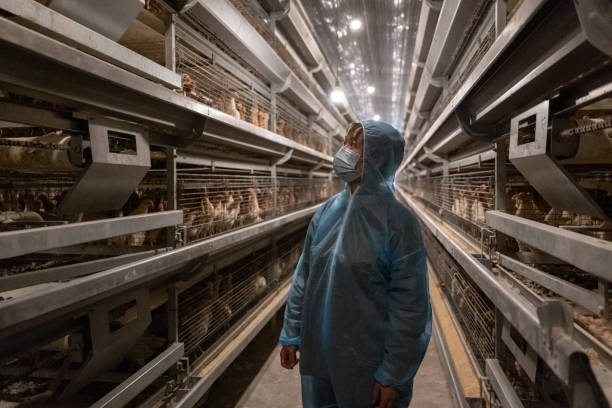
All these elements combine into a highly efficient, low-maintenance egg farm that runs smoothly with just 2–3 workers per shift.
Customization & Support – Tailored for Ghanaian Farms
One size doesn’t fit all — especially in African agriculture. At Livi Machinery, we don’t believe in cookie-cutter solutions. Whether your farm is located near Lake Volta with high humidity or in northern Ghana’s drier zones, we customize each project based on regional climate, power availability, water source, and operational goals.
For instance, if grid electricity is unstable, we can integrate solar-powered backup systems for essential functions like ventilation and water pumps. If water supply is limited, we design closed-loop recycling options or rainwater harvesting integration. Need larger storage for feed or eggs? We adjust building dimensions accordingly.
Our team provides full support from initial consultation to installation and training. Once the equipment arrives at Tema Port, our engineers travel to your site to supervise setup, calibrate machines, and train your staff on day-to-day operation and troubleshooting. We also offer ongoing technical advice via WhatsApp or video call, so you’re never left stranded.
And because durability matters most, all our products are built with heavy-duty components tested under harsh conditions. Galvanized steel frames last over 15 years, motors are IP-rated for dust and moisture resistance, and electrical parts meet international safety standards.
Real Results: Success Stories Across Ghana
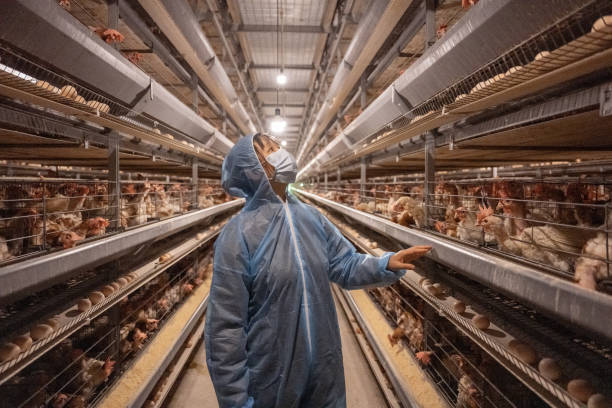
Over the past five years, we’ve delivered automatic layer systems to farms in Ashanti, Eastern, Central, and Greater Accra Regions. One client in Ejura started with 10,000 layers and expanded to 20,000 after seeing how much easier automation made daily operations. His egg collection went from 7,000 to nearly 18,000 eggs per day, with fewer losses and healthier birds.
Another farmer near Winneba switched from free-range to automatic cages after repeated Newcastle disease outbreaks. Since installing our climate-controlled house with biosecurity features, he hasn’t had a major illness scare — and his feed conversion ratio improved dramatically.
These stories aren’t outliers. They reflect a growing trend: modern poultry farming in Ghana is shifting toward technology-driven efficiency. And as consumer demand for safe, consistent eggs grows — both locally and for export markets like Nigeria and Togo — being able to scale quickly gives forward-thinking farmers a real competitive edge.
If you’re ready to take your egg business to the next level, now is the time to plan your new automated layer house. Let us help you design a system that fits your budget, land size, and long-term vision.
Want to see how an automatic layer cage system can transform your farm? Send us your contact info today, and we’ll send over a free layout design, equipment list, and cost breakdown — no obligation. Whether you’re starting from scratch or upgrading an existing facility, we’re here to guide you every step of the way. Just drop us a message with your name, location, and number of birds, and let’s get the conversation started.
FAQ
What does a full automatic layer cage system for 20,000 chickens include?
It includes cages, automatic feeding and watering lines, egg collection belts, manure removal system, ventilation fans, cooling pads, and control panel. Optional extras include solar backup, remote monitoring, and feed storage silos.
How much space do I need for 20,000 layer hens?
A typical setup requires around 2,500 to 3,000 square feet (about 70–90 meters long x 10–12 meters wide), depending on cage tier configuration and aisle spacing.
Can the system run on solar power?
Yes, we offer hybrid models that use solar energy for ventilation, water pumps, and lighting, especially useful in areas with unreliable electricity.
How long does installation take in Ghana?
From arrival at port to full operation, expect 4–6 weeks, including site prep, delivery, assembly, and staff training.
Is after-sales service available in Ghana?
Absolutely. We provide phone and online support plus on-site technician visits when needed. Spare parts are also kept in stock for fast replacements.
How many workers are needed to operate the system?
Typically 2–3 trained staff members can manage feeding checks, egg collection, cleaning, and monitoring duties efficiently.
Do you help with importing and customs clearance?
We assist with documentation and shipping logistics. While you handle local customs, we provide all necessary certificates and invoices to make the process smoother.
What’s the expected lifespan of the equipment?
With proper maintenance, galvanized cages and main components last 12–15 years or more. Motors and belts may need replacement every 5–7 years.
Can the system be expanded later?
Yes, modular designs allow you to add sections or upgrade components as your farm grows.
How do I request a quote or design plan?
Just share your farm details — number of birds, available space, power/water status — and we’ll send a customized proposal with pricing, 3D layout, and timeline.