How to Select Poultry Farm Equipment for 30,000 Layers in Nigeria: Labor, Reliability, and Lifecycle Risk Guide
Quick Answer: What Equipment Should a 30,000-Layer Project Evaluate First?
For a planned 30,000-layer farm in Nigeria, the best poultry farm equipment is not a single cage purchase. It is a coordinated Layer Farming System matched to the poultry-house layout, egg-sales workflow, labor plan, power and water reliability, manure route, biosecurity approach, and expansion plan.

Plan a Reliable 30,000-Layer Farm
Share your poultry-house dimensions, planned flock phases, power and water conditions, labor plan, and expansion goals for an equipment readiness review.
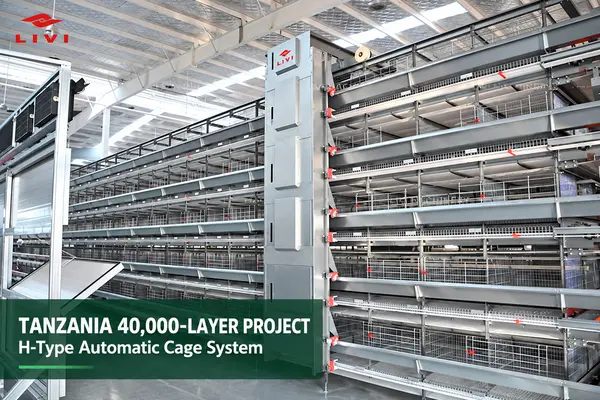
The LIVI H1200 Automated Cage System is an H-Type Layer Cage system intended for layer farms above 10,000 birds. Its stated standard configuration includes H1200 equipment, a travelling feeder, high-specification Automatic Drinking, flat-belt manure removal with transverse and inclined manure removal, and an egg collector. Feed silos, lighting, ventilation, climate-control equipment, and alarms can be considered as optional equipment.
Before approving a layout or quotation, confirm house dimensions, construction condition, utilities, staffing, egg handling, manure destination, site access, and final technical scope. The right LIVI poultry farm equipment package is one that can be installed, operated, inspected, and maintained under the actual farm conditions.
Is a 30,000-Layer Automated Farm Ready for Equipment Selection?
Start with the business plan. Identify how eggs will be sold, how frequently they must be dispatched, who will manage the flock, and whether 30,000 layers will be commissioned in one phase or expanded in stages. Equipment cannot correct an undefined market route, unclear management responsibility, or an unassessed poultry house.

Turn the farm plan into design inputs. A supplier needs the land plan, poultry-house dimensions, building status, internal and loading access, water source, electrical supply, backup-power approach, labor availability, egg-handling area, and manure destination. Biosecurity separation and local approval responsibilities should also be defined with relevant local parties. FAO management guidance emphasizes the importance of an appropriate physical environment, clean water, quality feed, and waste management.
An H-Type Layer Cage arrangement should be assessed only after building geometry and daily handling routes are known. Do not assume cage rows, bird allocation, house size, density, or equipment quantities from flock size alone. A final layout and technical calculation must establish these points.
Automation should be selected for operational fit, not because it is the highest available level or carries the highest quotation total. Automatic Feeding, Automatic Drinking, Automatic Egg Collection, and Automatic Manure Removal require reliable utilities, trained operators, inspection routines, cleaning access, and spare-parts planning. The best poultry cage for large scale chicken farm is therefore the system that fits the building, workflow, utilities, and management plan.
H1200 Equipment Components and Buyer Verification Points
The following information supports comparison and inspection. It is not a final bill of quantities for 30,000 layers.

| Equipment area | Confirmed LIVI H1200 information | Why it matters | What to confirm |
|---|---|---|---|
| Layer Cage System | Automated H-Type system for layers, recommended for farms above 10,000 birds. | It may fit the planned scale. | Final bird allocation, layout, service routes, and quantities. |
| Automatic Feeding | Travelling feeder: 3.0mm zinc-aluminum-magnesium alloy frame, 1.0mm hopper, 0.75kw motor. | Feeding is a complete route, not one machine. | Feed source, route, controls, maintenance access, and electrical interface. |
| Feed auger | Transverse and inclined auger: 3.0mm PVC outer pipe, 110mm diameter, 1.1kw motor. | It connects feed supply with the feeding workflow. | Site-specific power design, routing, installation, and inspection access. |
| Drinking, egg collection, manure removal | Automatic Drinking, Automatic Egg Collection, and flat-belt, transverse, and inclined manure removal are stated functions. | These systems must work as one daily process. | Water preparation, egg route, manure discharge, cleaning, and operator responsibilities. |
| Manure Belt | 1.2mm virgin PP belt; 3.0mm zinc-aluminum-magnesium alloy flat-belt frame. | Material and support details are relevant in manure and moisture areas. | Collection, storage, onward handling, and site responsibilities. |
| Cage mesh | Q235 mesh, hot-dip galvanized after welding; 2.3mm base, side, and partition mesh; 4.0mm door wire; 2.5mm support wire; 25mm spacing; 7° slope. | Mesh and coating are core quality comparison points. | That final documents and supplied components match approved specifications. |
Material information should be checked against approved drawings, the bill of quantities, and the final quotation. It should not be used alone to predict project performance or maintenance intervals. Request documented production and quality-control evidence for the exact cage mesh, feeder, Manure Belt, motors, and related components proposed for the order.
How Should Automation Be Matched to Labor and Utilities?
Assess the house as a connected workflow. The H1200 configuration combines a Feeding System, Drinking System, Egg Collection System, and Manure Removal System. The practical issue is whether the site can support feed receipt, water supply, electrical controls, egg transfer, manure discharge, cleaning, inspection, and fault reporting every day.

Automatic Feeding should be assessed beyond the travelling feeder. Confirm where feed enters the house, how it moves through the transverse and inclined auger, who checks feed flow, and how feed residue is managed. The supplied feeder information includes adjustable feed distribution, observation windows, cleaning brushes, bird-protection rods, and feed-return blocks. Verify the final scope instead of assuming every listed feature is included.
Automatic Drinking requires a dependable source and defined water-management plan. The product record confirms high-specification Automatic Drinking but does not state water-quality limits, flow requirements, or treatment specifications. Resolve source assessment, treatment needs, storage, distribution, and routine checks before installation.
Electrical planning is equally important. Travelling feeders, augers, egg collection, manure removal, ventilation, lighting, alarms, and climate-control equipment may depend on the site electrical plan. Confirm supply capacity, protection arrangements, control locations, backup power, and operating procedures with qualified project parties. Do not calculate site demand from component motor ratings alone.
Optional lighting, ventilation, climate control, alarms, and feed silos should support the confirmed farm plan. More automation can be appropriate where management capacity and utilities support it; where those conditions remain uncertain, first close the underlying project inputs.
What Quality Checks Reduce Lifecycle Risk?
Inspect details that are difficult to correct after installation. For cage mesh, compare the specified Q235 material, hot-dip galvanizing after welding, wire dimensions, 25mm base-mesh spacing, and 7° slope with approved documents. Check that supplied mesh matches the stated configuration.
Compare H1200 System Scope Carefully
Send your proposed layout and automation priorities to clarify H1200 equipment scope, optional systems, material checks, delivery boundaries, and final technical requirements.
Review supporting parts as well as the visible cage body. The supplied component information includes zinc-aluminum-magnesium alloy in the feeder frame, flat-belt frame, feed trough, trough bracket, and cage-mesh uprights. The feed trough is stated as 1.0mm zinc-aluminum-magnesium alloy with one-piece forming, while the trough bracket is 2.0mm zinc-aluminum-magnesium alloy. Ask how these items, drives, guards, and controls appear in the final bill of quantities.
For manure handling, inspect the 1.2mm virgin PP Manure Belt, tensioning and alignment arrangements, support rollers, scrapers, and drive components. The product information describes a 0.75kw dual-motor geared drive arrangement for the manure-belt system. Confirm the final drive configuration, routing, access, and discharge arrangement for the actual house.
Before shipment, compare materials, thicknesses, surface treatments, motors, component lists, and quantities with approved technical documents. This documented comparison is more useful than broad durability claims.
What Delivery, Utility, and Lifecycle Risks Should Be Closed Before Ordering?
A comparable quotation separates more than cage equipment. Request individual scope lines for automation components, optional systems, packaging, cross-border delivery, destination handling, inland transport, unloading, installation support, commissioning, operator training, spare parts, and excluded work. A lower total may not represent the same supply boundary.
Do not assume a transport method, delivery date, container quantity, installation duration, local tax treatment, or responsibility split. These details are not defined in the supplied H1200 product record and must appear in commercial and technical documents. Site preparation should also identify storage, unloading access, construction coordination, utilities, labor, and safety responsibilities.
Manure removal is a site workflow, not only an equipment feature. H1200 includes flat-belt, transverse, and inclined manure removal, but the receiving point, collection method, storage, onward handling, and local compliance responsibilities remain project inputs. FAO notes that poultry by-products require proper management to limit environmental and health concerns.
LIVI states that it supports planning and equipment construction through cross-border delivery, installation and commissioning, and long-term service. Obtain the project-specific scope in writing. Confirm installation guidance, commissioning, training, acceptance checks, spare-parts planning, fault-reporting contacts, warranty terms, and each party's responsibilities. The product information does not state response times, service duration, spare-parts stock, or warranty coverage.
A Practical Procurement Checklist for Nigerian Layer Investors
- Define the flock plan, egg-sales route, operating phase, labor model, and expansion objective.
- Provide land and poultry-house dimensions, building status, access routes, and building information.
- Confirm water source, storage, treatment needs, electrical supply, and backup-power approach.
- Map feed receipt, storage, distribution, egg collection, dispatch, manure discharge, and cleaning routes.
- Request a preliminary H1200 layout that separates standard and optional equipment.
- Check cage mesh, coatings, component materials, thicknesses, motors, and final quantities.
- Compare logistics, unloading, installation, commissioning, training, spare parts, warranty terms, and exclusions line by line.
- Approve final technical documents and responsibility boundaries before production or shipment.
- Complete commissioning, training, functional checks, and acceptance against the approved scope.
H1200 may be assessed for a Nigerian project planning 30,000 layers because it is recommended for farms above 10,000 birds. If house geometry, handling routes, utilities, and operating responsibility are still unconfirmed, the correct next step is project-data collection and preliminary layout review.
FAQ
Is H1200 poultry farm equipment suitable for a planned 30,000-layer farm in Nigeria?
H1200 can be considered because it is an automated H-Type Layer Cage System recommended for farms above 10,000 birds. Suitability for 30,000 layers depends on poultry-house dimensions, final layout, utility reliability, egg and manure routes, labor plan, and approved technical calculation. The supplied information does not provide a final 30,000-bird configuration, cage quantity, tier count, or house size, so these must be confirmed before ordering.
Which automation functions should be assessed first for 30,000 layers?
Assess the daily workflow first: Automatic Feeding, Automatic Drinking, Automatic Egg Collection, and Automatic Manure Removal are stated H1200 functions. Their value depends on how feed supply, water supply, egg handling, manure discharge, staffing, maintenance, and electricity work together. Optional lighting, ventilation, climate control, alarms, and feed silos should be included only after operating conditions and the management plan are defined.
What material checks matter when comparing layer cage equipment?
Ask suppliers to document mesh material, wire dimensions, surface treatment, structural thicknesses, and every automation component. For H1200, checks can include Q235 hot-dip-galvanized cage mesh, stated wire dimensions, a 7° base-mesh slope, a 1.2mm virgin PP Manure Belt, and stated zinc-aluminum-magnesium alloy components. Compare these data with final technical documents rather than using material descriptions alone to predict service life or farm performance.
How should a buyer compare quotations for an Automated Cage System?
Compare the same scope, not only the total price. List cage equipment, feeding, drinking, egg collection, manure removal, optional environmental equipment, controls, packaging, delivery, unloading, installation, commissioning, training, spare parts, warranty terms, and exclusions separately. If an offer lacks quantities, material details, responsibilities, delivery terms, or service boundaries, request clarification. No project price, freight charge, lead time, or warranty period has been supplied for this project.
What should be confirmed about installation, training, and after-sales support?
Obtain a written scope covering delivery coordination, unloading responsibilities, installation guidance, commissioning, operator training, acceptance checks, spare-parts planning, fault support, and warranty terms. LIVI states that it supports planning, cross-border delivery, installation and commissioning, and long-term service. The supplied product record does not define response times, installation duration, spare-parts stock, or warranty coverage, so these points require final confirmation.
Plan Your Equipment Decision With Complete Inputs
TAGs: best poultry farm equipment, 30000 layers in Nigeria, H1200 Automated Cage System, Layer Cage System, Automatic Manure Removal, poultry farm site selection