40,000-Layer Poultry Farm in Nigeria: House Layout, Equipment and Investment Priorities

What Does a 40,000-Layer Farm in Nigeria Require?
A 40,000-layer poultry farm should be designed as a coordinated production system. Cage capacity, house dimensions, feeding, drinking, egg collection, manure removal, ventilation, power and staff movement must work together.
For Nigerian conditions, the plan must also respond to heat, seasonal humidity, electricity interruptions, water storage and the logistics of feed and egg transport. The project should not begin with a fixed building copied from another farm. Equipment and house drawings should be developed together.
Choose a One-House or Two-House Production Plan
Forty thousand layers can be placed in one large enclosed house or divided between two houses. The correct choice depends on land, investment strategy, management capacity and biosecurity.
One Large House
A single high-capacity house can reduce duplicated equipment and simplify central egg and feed handling. It normally requires a high-density H-type cage system, strong ventilation, dependable controls and emergency power.
Two Houses
Two houses of approximately 20,000 birds each can support phased construction and flock rotation. The layout may reduce the production risk of placing every bird in one environmental zone, but it can increase construction, utility and equipment interfaces.
Before deciding, compare capital cost per bird, labor, ventilation reliability, flock scheduling and expansion plans.
Recommended Cage and Capacity Approach
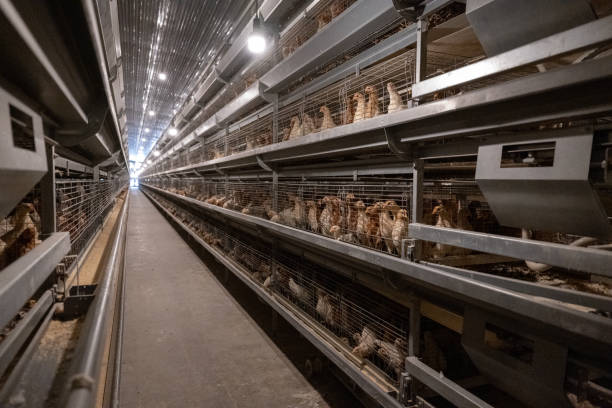
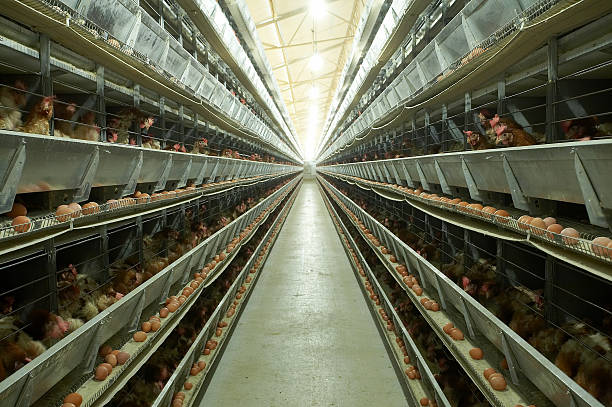
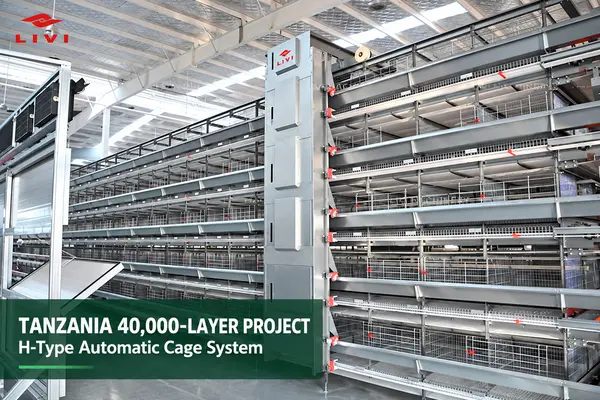
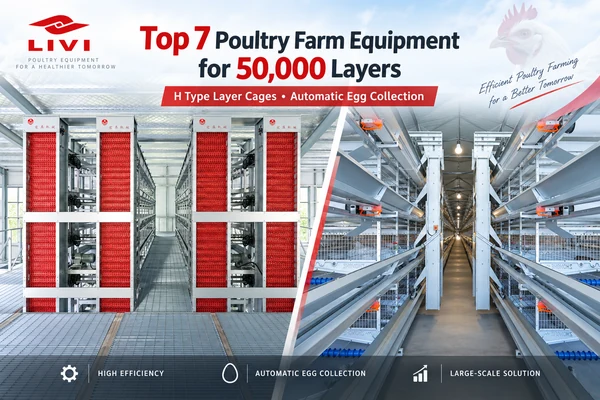
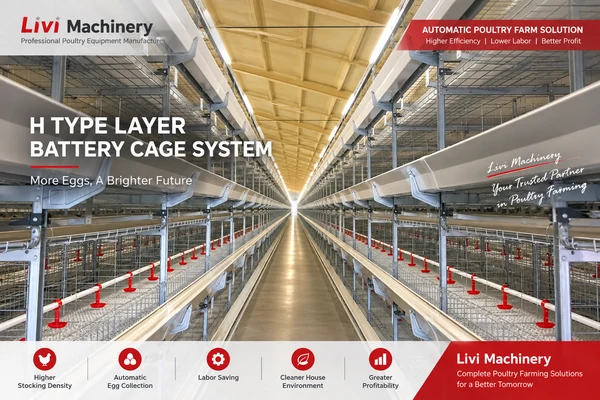
An H-type layer cage system is generally practical for a commercial farm of this scale because vertical tiers improve house utilization and integrate automation. Depending on the model, one set may accommodate different bird quantities, so final cage numbers must come from the selected specification.
A design should state:
- Birds per cage set
- Number of cage tiers
- Number of cage rows
- Sets per row
- Total installed bird spaces
- Front, rear and cross-passage clearances
- Service access around motors and conveyors
LIVI’s commercial layer cage range includes configurations that can be matched to the project’s capacity and building plan.
Poultry House Layout Priorities
The final dimensions depend on the cage model, but every layout must reserve working space beyond the cage footprint.
Airflow
Rows should support uniform airflow across cage levels. Fan and cooling-pad positions must be coordinated with columns, doors, control rooms and egg-transfer openings.
Material Flow
Feed should enter from a clean delivery route. Eggs should move toward a clean collection and packing area. Manure should leave through a separate dirty route. These flows should not cross one another.
Maintenance Access
Technicians need access to drive motors, belts, drinker regulators, electrical panels and fans. Narrow clearances can turn routine maintenance into extended downtime.
Automatic Equipment for 40,000 Layers
Feed Storage and Automatic Feeding
The feed silo should hold a planned reserve based on daily consumption and delivery reliability. Conveyors transfer feed into the house, while traveling feeders or chain systems distribute it along rows and tiers.
Nipple Drinking
Provide filtered water, pressure regulation, medication capability, meters and flushing points. Storage must cover hot-weather demand and interruptions. House-level monitoring can reveal leaks and flock problems early.
Belt Manure Removal
Belts beneath each cage tier remove manure regularly, helping manage moisture and ammonia. The external discharge conveyor and manure destination must be included in the civil plan.
Automatic Egg Collection
Egg belts carry production to an elevator or central conveyor. The collection line should match peak hourly volume and connect smoothly to grading, packing and storage without excessive transfer points.
Environmental Control
Use a calculated combination of exhaust fans, cooling pads, air inlets, sensors, alarms and intelligent controllers. Nigerian heat makes backup ventilation and water supply critical.
Power and Water Resilience
Prepare an electrical load schedule for feeding motors, manure belts, egg conveyors, pumps, fans, lighting and controls. Separate critical loads so ventilation, water and alarms remain available during an outage.
Generator sizing must consider motor-starting demand. Establish automatic or documented manual transfer procedures and conduct regular test runs.
For water, calculate bird consumption, cooling use, cleaning and reserve days. Protect tanks and treatment equipment from contamination and unauthorized access.
Biosecurity and Site Planning
A commercial site should include a controlled entrance, vehicle disinfection, staff changing facilities and separation between clean and dirty traffic.
Recommended zones include:
- Feed delivery and silo area
- Poultry houses inside a controlled production zone
- Egg collection and dispatch area
- Manure handling and mortality area
- Generator, water and maintenance zone
- Reserved area for future houses
The site’s drainage and prevailing wind direction should be considered before house orientation is finalized.
Investment Priorities
Divide the budget into clear groups:
- Land preparation and poultry houses
- Cage and automation systems
- Ventilation, water and power infrastructure
- Birds, feed and pre-production expenses
- Working capital and contingency
Avoid using the feed and operating reserve to complete construction. A finished farm without enough working capital cannot reach stable production.
Pre-Installation Checklist
Before equipment ships, confirm:
- Foundations, floors and openings match the approved layout
- Building dimensions and columns are verified on site
- Incoming power and grounding are ready
- Water tanks, filters and pipe routes are installed
- Feed silo foundation and delivery access are complete
- Manure discharge and egg-room connections are prepared
- Unloading, storage and installation labor are arranged
- Critical spare parts and maintenance tools are available
LIVI provides poultry farm design and installation support to coordinate these requirements before commissioning.
Plan Your 40,000-Layer Farm With LIVI
The most reliable 40,000-layer project is not simply the layout with the highest stocking density. It is the plan that can maintain feed, water, airflow, egg transfer and manure removal during normal operation and foreseeable disruptions.
For additional scale-planning examples, review this large poultry automation solution and adapt the principles to the actual site.